Ripple CI's component-centric design streamlines iteration and issue resolution. Since components are isolated and built in dependency order, you can address failures by focusing solely on the problematic component, fixing it, and resuming the build process from the point of failure.
Coupled with Cloud Workspaces, which offer a contextual IDE pre-loaded with necessary components, fixing CI issues becomes remarkably straightforward. Let's illustrate this workflow.
Your initial export to Bit (from Hope AI or Cloud Workspaces) might involve numerous components, some of which may fail. As depicted below, Ripple CI halts propagation to dependent components upon encountering a failure, preventing cascading failures.
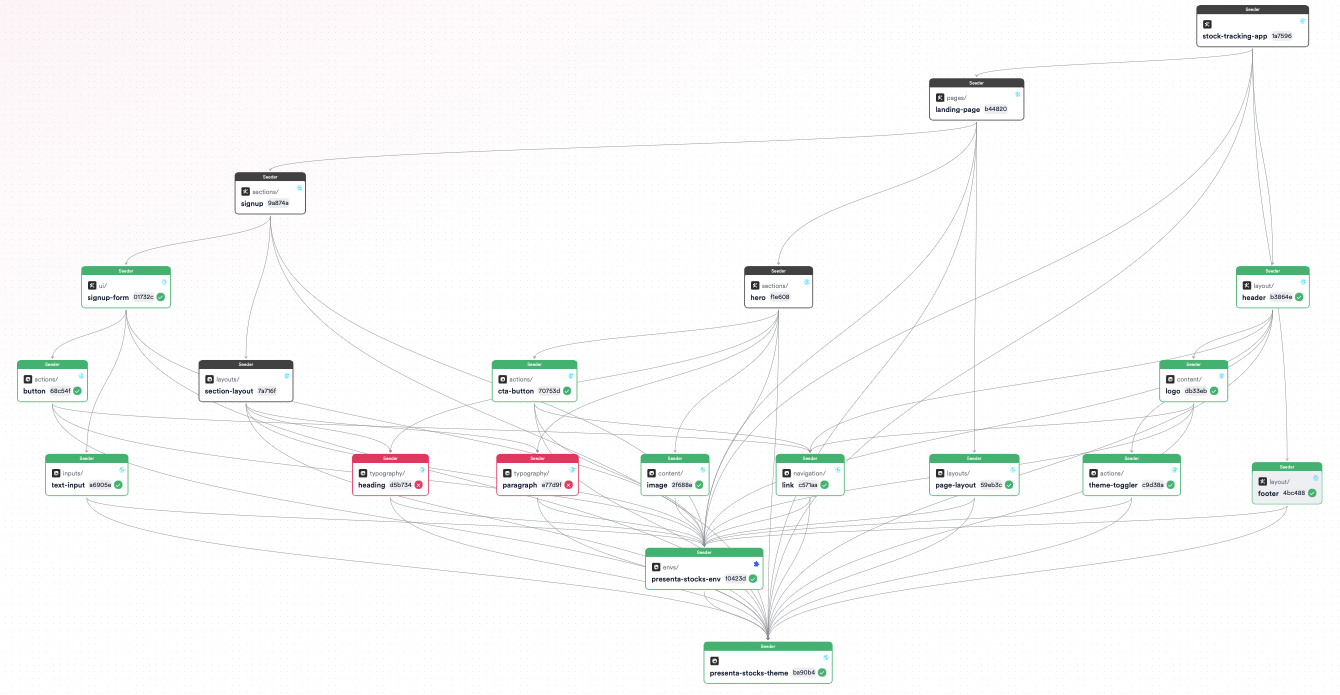
Open a new Cloud Workspace containing the components from the failed Ripple CI job (or reuse the existing workspace) and edit them to resolve the issue.
After fixing the issue, subsequent Ripple CI jobs will be significantly smaller, rebuilding only the modified components, including the previously failed ones, resulting in faster iteration cycles.
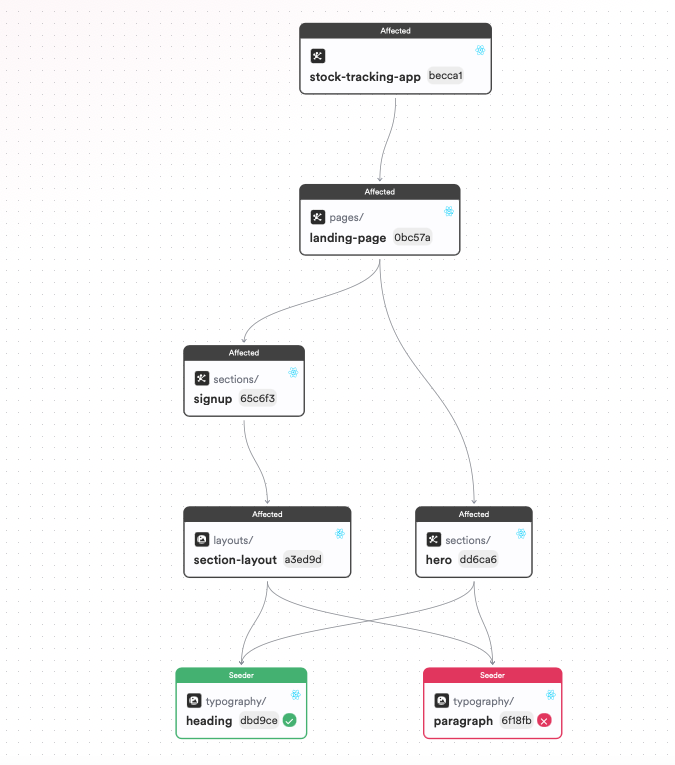
This approach optimizes development workflows by minimizing rebuild times and focusing on only the code that has been modified, especially in later development iterations.